

Sanitary Material Handling and Hygienic Equipment
Why Is Handling Equipment Important for Global Buyers?
For global buyers, handling equipment is more than a warehouse purchase. It influences safety, delivery speed, labor efficiency, and long-term operating costs. A forklift, pallet jack, conveyor, or lifting table can determine how smoothly goods move from receiving docks to storage areas. Small delays quickly become expensive when several sites depend on the same supply chain.
Real purchasing decisions require more than comparing catalog prices. Buyers should examine load capacity, lifting height, aisle width, battery performance, maintenance access, and operator comfort. A machine that works well in a spacious warehouse may struggle in a narrow facility with uneven floors. Local climate also matters. Humidity, dust, cold storage, and outdoor exposure can affect equipment reliability. handling equipment must match actual working conditions, not an idealized specification sheet.
Supplier experience provides another important layer of confidence. Clear technical documents, traceable components, responsive service teams, and practical training can reduce uncertainty across borders. Independent certifications and documented testing may support safer decisions, but paperwork alone does not prove field performance. A site visit or realistic trial can reveal problems that brochures hide.
No checklist is perfect. Some buyers still focus too heavily on purchase price. That mistake can increase downtime, repair expenses, and replacement pressure. A more dependable evaluation considers total cost, worker feedback, spare-parts availability, and expected service life. Global buyers who ask precise questions early can choose equipment that supports safer, steadier, and more adaptable material handling operations. The right choice is rarely the cheapest one. It is the one that keeps working.
Handling Equipment Defined: Its Role Across Global Supply Chains
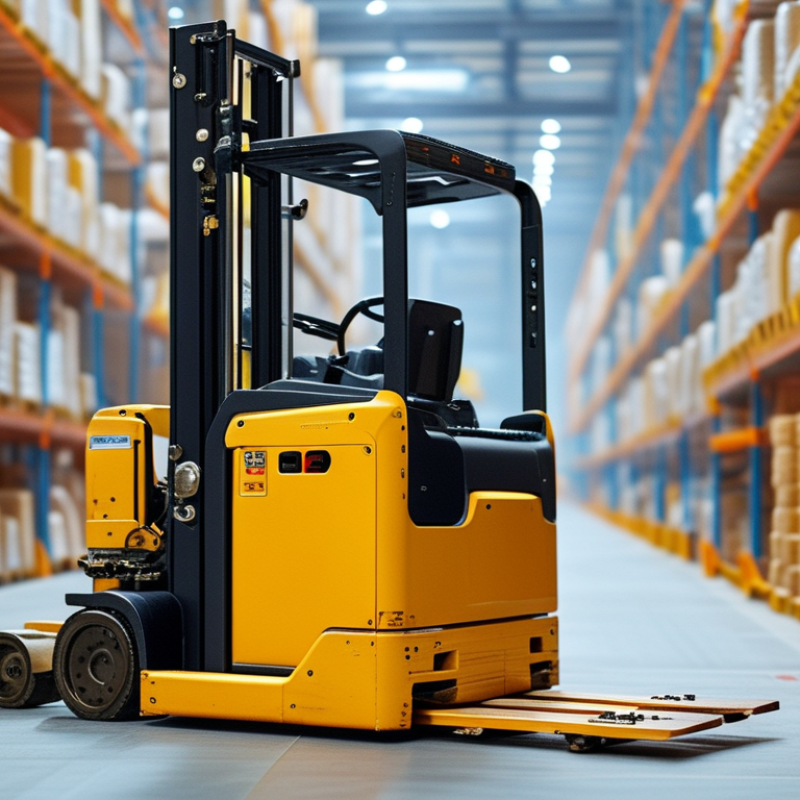
Handling equipment includes forklifts, pallet trucks, conveyors, hoists, cranes, and automated storage systems. These tools move, lift, position, and protect goods across warehouses, factories, ports, and distribution centers. For global buyers, the equipment is not a simple purchasing item. It connects cargo movement with labor safety, inventory accuracy, loading speed, and delivery reliability.
UNCTAD’s Review of Maritime Transport 2023 reports that over 80% of global merchandise trade by volume moves by sea. Containers must therefore pass through several handling points before reaching customers. Poorly matched equipment can create delays at each transfer. The World Bank’s Logistics Performance Index 2023 also highlights logistics competence, tracking, and timeliness as core performance areas. Equipment affects all three. A well-designed conveyor can reduce manual scanning errors. Suitable lifting capacity can prevent damaged pallets and unstable loads. Small details matter.
The MHI Annual Industry Report 2024 found that 55% of supply chain professionals planned to increase investment in innovation. Yet automation is not always the best answer. A compact warehouse may need better racking and clearer traffic routes first. A rough loading yard may require stronger wheels and weather-resistant controls. Buyers should test aisle width, floor conditions, load dimensions, maintenance access, and operator training requirements. Specifications can look perfect on paper. They sometimes fail beside a wet dock at 6 a.m. That gap deserves honest review before procurement.
Why Is Handling Equipment Important for Global Buyers? - Handling Equipment Defined: Its Role Across Global Supply Chains
| Equipment Category | Primary Function | Typical Operating Range | Supply Chain Application | Operational Contribution | Key Global-Buying Considerations |
|---|---|---|---|---|---|
| Hand Pallet Trucks | Move palletized goods short distances on warehouse and loading-dock floors. | Common rated capacities are approximately 2,000–5,500 lb (900–2,500 kg), depending on design. | Receiving, staging, order preparation, and container loading. | Provides low-cost horizontal movement without requiring powered equipment. | Check pallet dimensions, fork length, wheel material, floor condition, and conformity with local safety requirements. |
| Counterbalance Forklifts | Lift, stack, retrieve, and transport palletized or unitized loads. | Common warehouse capacities are approximately 3,000–15,000 lb (1,360–6,800 kg); higher-capacity models also exist. | Factories, distribution centers, ports, yards, and cross-docking operations. | Supports vertical storage and faster loading or unloading of international freight. | Evaluate fuel or battery type, lift height, aisle width, attachment requirements, operator training, and emissions rules. |
| Reach Trucks and Stackers | Place and retrieve pallets in narrow aisles and at elevated storage locations. | Typical capacities range from about 1,000–4,500 lb (450–2,000 kg), with lift heights varying by model. | High-density warehouses and distribution centers. | Improves storage density and makes better use of building volume. | Confirm rack compatibility, residual capacity at maximum lift height, aisle dimensions, battery-charging infrastructure, and floor flatness. |
| Conveyor Systems | Transport cartons, totes, parcels, pallets, or bulk materials along a defined route. | Capacity and speed depend on conveyor type, product dimensions, incline, and system layout. | Production lines, sortation areas, packing zones, and parcel distribution. | Creates predictable material flow and can reduce repetitive manual handling. | Assess throughput, load characteristics, controls integration, guarding, emergency stops, spare parts, and installation requirements. |
| Cranes and Hoists | Lift and position heavy or oversized loads that cannot be moved safely by forklifts. | Rated capacities range from light-duty hoists to systems handling many tonnes; the safe working load is equipment-specific. | Manufacturing, shipyards, construction, ports, maintenance, and project cargo handling. | Enables controlled handling of heavy components while reducing reliance on manual lifting. | Verify rated load, span, lift height, duty class, power supply, structural support, inspection procedures, and operator qualifications. |
| Automated Guided Vehicles (AGVs) | Move materials between predefined points using onboard navigation and control systems. | Payload, speed, runtime, and navigation accuracy vary according to vehicle design and site conditions. | Repetitive transport between receiving, storage, production, and shipping areas. | Improves repeatability, traceability, and labor allocation in structured workflows. | Review navigation method, traffic management, safety sensors, wireless connectivity, charging strategy, integration, and local regulations. |
| Dock Equipment | Bridge the height and distance between a facility floor and a truck or shipping container. | Capacity is selected according to forklift and load weights, dock height, vehicle type, and loading conditions. | Import and export docks, cross-docking facilities, and warehouse shipping areas. | Reduces transfer gaps, improves loading safety, and supports more consistent vehicle turnaround. | Check dock height range, rated capacity, lip length, weather protection, vehicle compatibility, drainage, and maintenance access. |
| Racking and Storage Systems | Store pallets, cartons, components, and other inventory in organized locations. | Load limits are determined by beam type, upright configuration, bay dimensions, and engineering calculations. | Warehouses, fulfillment centers, cold stores, and production facilities. | Increases usable storage capacity and supports inventory identification and control. | Confirm seismic conditions, floor loading, pallet size, clearances, fire protection, anchoring, inspections, and future expansion needs. |
Related Posts
-
2026 How to Choose Manual Handling Equipment?
-
10 Essential Tips for Efficient Handling Equipment Management?
-
Top Material Lifting Equipment from China for Global Buyers?
-
How to Choose Handling Equipment for Efficient Global Sourcing?
-

10 Essential Tips for Handling Equipment Safely and Efficiently
-

2026 How to Optimize Bulk Material Handling for Efficiency and Safety?