How to Choose Industrial Material Handling Equipment
Choosing industrial material handling equipment is not just a catalog exercise. It is a decision about how people, materials, and space work together each shift. An undersized conveyor can create queues near a packing station. An oversized forklift may turn a narrow aisle into a daily bottleneck. Delays add up. Small mismatches matter.
Start by tracing the material’s real journey, from receiving dock to storage, production, and shipping. Note load dimensions, weight, travel distance, floor conditions, and peak-hour volume. Watch operators move through the space; a process map may miss a pallet that blocks a doorway every afternoon. Then compare equipment capacity, turning radius, lift height, controls, and maintenance needs. Check manufacturer specifications against actual operating conditions, not only ideal ones.
The right choice should support safe, predictable work without paying for capacity the operation rarely uses. Consider training, parts availability, inspection routines, and how quickly equipment can be serviced. Ask operators and maintenance staff what causes delays today. Their answers may challenge the original plan—and that is useful. No checklist can replace a site assessment, and forecasts can be wrong. A short trial with representative loads can expose issues before a purchase becomes difficult to reverse. Evaluate options against measurable needs, document assumptions, and revisit them as workflows change. The best equipment is not always the newest or largest. It is the equipment that fits the task, the building, and the people using it.
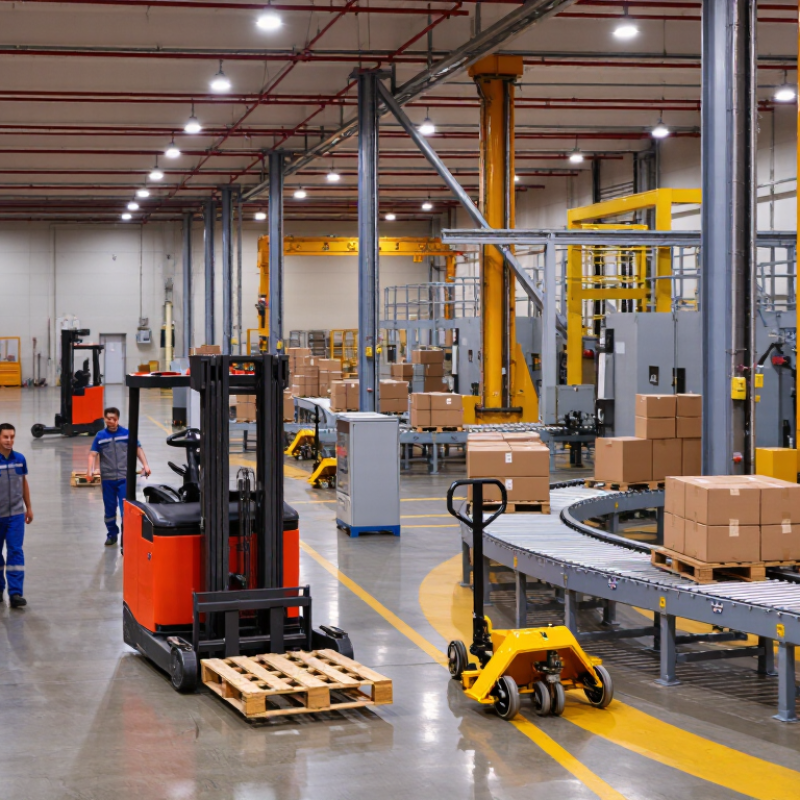
Map Material Flow and Measure Peak Loads, Travel Distance, and Hourly Throughput
Before choosing industrial material handling equipment, map how materials move through the facility. Walk the route from receiving to storage, production, and shipping. Mark doorways, tight turns, floor changes, and places where carts or pallets regularly wait. Watch a full shift. A layout drawing may show a clear aisle, while a parked pallet makes it unusable.
Record the weight and dimensions of typical loads, then identify the heaviest loads handled during busy periods. Check peak demand, not just daily averages: count moves per hour at receiving, production cells, and dispatch. For example, a line needing 24 pallet moves in one hour may overwhelm a system sized for the quiet afternoon average. Include loading and unloading time, operator breaks, and recurring congestion. Small delays add up.
Measure travel distance along the actual route, including detours around people and equipment. Note how often empty equipment must return, since repeated return trips can reduce available capacity. Compare these observations with equipment capacity, load limits, turning space, and expected cycle time. Keep measurements for several operating days; one unusually busy shift can distort the picture, but ignoring it is risky too. Recheck the map after process changes, because material flow rarely stays exactly as planned.
Verify Rated Capacity at the Load Center Under OSHA 29 CFR 1910.178
How to Choose Industrial Material Handling Equipment
Verify Rated Capacity at the Load Center Under OSHA 29 CFR 1910.178
A forklift’s rated capacity applies to a specific load center and equipment configuration. The load center is the horizontal distance from the fork face to the load’s center of gravity. If a pallet is unusually deep, or its contents sit unevenly, that center may shift outward. Capacity can drop. Check the truck’s data plate and manufacturer guidance before handling the load, rather than relying on a familiar-looking pallet.
OSHA 29 CFR 1910.178(o)(2) says trucks may handle only loads within their rated capacity. The standard also requires capacity-affecting modifications to be approved and the truck’s markings updated when needed. Attachments matter. A clamp, fork extension, or other change can alter capacity, so verify the rating for the actual configuration. Keep the data plate legible and accessible.
A practical check takes only a moment: compare the load’s weight and dimensions with the rated capacity at the relevant load center. Measure, don’t guess. It is easy to treat the plate as paperwork, especially during a busy shift. That assumption deserves a second look. If the load or attachment falls outside the listed conditions, pause and confirm the correct rating with the equipment supplier or manufacturer.
Match Equipment Size to Aisle Width, Turning Radius, and Floor Limits
Choosing material handling equipment starts with the route, not the machine. Measure the narrowest aisle between the actual rack faces, including guards and any pallet overhang. Then compare that space with the equipment’s turning radius and required operating aisle. These figures are not interchangeable. A truck may turn in place yet still need extra clearance to approach a rack with a long load. Allow room for the load’s swept path, not just the vehicle body. Small margins matter.
Check floor limits with the equipment fully loaded. Its weight, battery, attachment, and cargo all affect the load placed on wheels and floor joints. A concrete slab can look sound while a damaged seam or ramp creates a practical problem. Review the floor’s rated capacity with a qualified site professional, especially around mezzanines or older sections. Measure twice. Then test the route using a safe mock load or controlled trial. Watch for tight turns, blind corners, door thresholds, and places where operators must reverse. I have seen plans miss a few inches of pallet projection; the drawing looked fine, but the working aisle did not. Recheck measurements after racks, barriers, or storage locations change.
Compare Power Sources by Duty Cycle, Emissions, and Energy Use per Shift
Choosing industrial material handling equipment starts with the actual duty cycle. Record operating hours, loaded travel, lift height, and idle time across a typical shift. A truck moving pallets continuously needs different power planning than one making short trips with long pauses. Count real work, not just scheduled hours.
Electric equipment produces no exhaust at the point of use, which matters in enclosed warehouses. Its energy use per shift depends on travel distance, load weight, floor conditions, and charging losses. Check whether the battery can cover the shift with time for charging or battery changes. Combustion-powered equipment can suit demanding outdoor work, but measure fuel consumed and consider exhaust, ventilation, and noise. A cold morning may also change warm-up time and fuel use.
Compare energy costs using measured kilowatt-hours or fuel per shift, rather than brochure estimates. Include breaks, waiting, and partial loads in the test. A neat spreadsheet can still mislead. One week of records may not represent peak season, and operators may work differently when equipment changes. Note those limits, then repeat the comparison during a busy period. Keep the assumptions visible, especially when comparing indoor routes with outdoor work.
Apply OSHA’s 3-Year Operator Evaluation Interval Under 29 CFR 1910.178
Choosing industrial material handling equipment means matching the truck to the work, then checking that operators can use it safely. Under OSHA’s powered industrial truck standard, 29 CFR 1910.178(l)(4)(iii), each operator’s performance must be evaluated at least once every three years. This is an evaluation interval, not an automatic requirement to repeat the full training course every three years. Keep the distinction clear.
A useful evaluation should reflect actual tasks: turning with a loaded pallet, stopping on the facility’s floor, and placing materials at working height. Conditions matter. A narrow aisle or a different truck type can change the risks. OSHA also requires refresher training in specified situations, including unsafe operation, an accident or near miss, or assignment to a different type of truck. Document the operator’s name, training date, evaluation date, and the trainer or evaluator’s identity. A neat record is helpful, but it cannot show how someone handles a blind corner during a busy shift. That part takes observation. And honest follow-up. Do not wait for the three-year mark when performance concerns arise.
How to Choose Industrial Material Handling Equipment
Apply OSHA’s 3-Year Operator Evaluation Interval Under 29 CFR 1910.178
OSHA requires each powered industrial truck operator’s performance to be evaluated at least once every three years (36 months). Refresher training is required when specified triggers occur, such as unsafe operation, an accident or near miss, assignment to a different truck type, or workplace changes that affect safe operation; do not wait for the three-year evaluation.