Blog
2026 Best Material Handling Carts for Global Buyers?
Choosing the right material handling carts in 2026 requires more than comparing prices and product photos. Global buyers must examine load capacity, frame strength, wheel performance, braking systems, and workplace ergonomics. A cart moving through a warehouse aisle faces different demands from one used on a construction site, hospital corridor, or retail backroom. Small details matter. A loose handle or undersized caster can slow daily operations.
This guide evaluates practical options for international purchasing teams. It considers steel, stainless steel, aluminum, and reinforced polymer designs, including their durability, weight, corrosion resistance, and maintenance needs. We also review platform carts, cage carts, shelf carts, drum carts, and specialized models for controlled environments. Real purchasing decisions involve more than specifications. Packaging quality, replacement parts, supplier communication, export documentation, and after-sales support can affect the total result. A cart may pass a catalog test but perform poorly on uneven floors or during repeated loading.
No cart is perfect.
Our approach combines application-based comparison with careful supplier verification. Buyers should request test reports, dimensional drawings, warranty terms, and clear load-rating evidence before placing large orders. Regional safety expectations and facility conditions may also differ, so one universal recommendation would be unreliable. Even experienced teams can overlook wheel material, turning radius, or storage constraints. That is why this 2026 overview focuses on measurable performance, practical experience, and transparent limitations. It aims to help global buyers make safer, more efficient, and more defensible purchasing decisions.
What Are Material Handling Carts and How Are They Used?
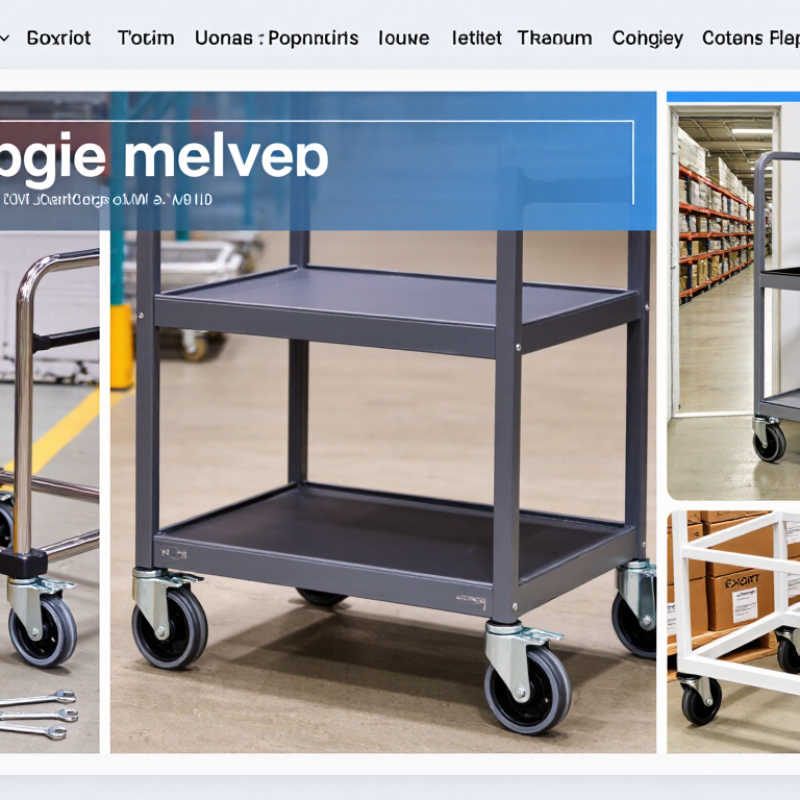
Material handling carts are wheeled tools designed to move goods safely across workplaces. They carry cartons, parts, tools, containers, and finished products. Unlike forklifts, carts usually support short-distance movement at floor level. Their simple design suits warehouses, factories, stores, hospitals, and maintenance areas. A well-chosen cart reduces repeated lifting and keeps materials organized. It also saves time during picking, replenishment, and internal delivery.
Workers use platform carts for large boxes and shelving carts for smaller items. Enclosed carts help protect loose parts during movement. In busy aisles, compact carts are easier to control and park. Some operations connect several carts for scheduled routes. That method works well, but turning space must be checked carefully. A crowded route can make a useful cart frustrating.
Reliable selection begins with the real load, not an estimated average. Check the rated capacity, deck size, handle height, caster type, and floor condition. Uneven floors may require larger wheels. Smooth floors may favor quieter casters. Brakes are important near ramps, loading points, and workstations. Workers should also inspect welds, fasteners, wheels, and handles regularly. A common field mistake is choosing maximum capacity while ignoring maneuverability. More capacity is not always better. The cart must fit through doors, elevators, and narrow aisles. It should also match local safety procedures and cleaning requirements. Small details often decide whether the cart helps or becomes another obstacle.
Which Types of Material Handling Carts Suit Different Industries?
2026 Best Material Handling Carts for Global Buyers
Which Types of Material Handling Carts Suit Different Industries?
Material handling carts should match the work, not only the load rating. Warehouses often need platform carts with large casters, strong decks, and easy turning in narrow aisles. A two-tier utility cart suits picking small cartons, tools, and packaging supplies. For heavy pallets, a low-profile cart can reduce lifting effort and improve stability during movement.
Manufacturing plants may benefit from shelf carts or enclosed bin carts. They keep fasteners, components, and work-in-process parts visible and organized. In healthcare facilities, smooth surfaces and quiet casters matter more than maximum capacity. A stainless-steel cart with rounded corners is easier to clean between departments. Food processing areas may require corrosion-resistant frames and removable shelves.
Some need silence.
Hotels, restaurants, and commercial kitchens often use service carts with locking wheels and compact footprints. These carts must pass through doorways without striking walls or equipment. Construction teams may prefer rugged platform carts with pneumatic-style wheels for uneven floors. However, softer wheels can leave marks indoors, so floor conditions deserve careful testing.
A cart chosen only by capacity may still perform poorly. I would check turning radius, handle height, wheel material, shelf spacing, and braking control before purchase. No selection is perfect. Operators may also need training, because even a well-designed cart becomes unsafe when overloaded or pushed too quickly. Small design details often decide whether a cart saves labor or creates another problem.
How to Compare Cart Capacity, Mobility, Safety, and Durability?
2026 Best Material Handling Carts for Global Buyers
Choosing a material handling cart starts with its real working load, not its advertised maximum. Compare dynamic capacity during movement with static capacity during storage. A cart carrying 500 kilograms may behave poorly on uneven floors. Keep heavy items low and near the center. Do not guess. Check the floor.
Mobility depends on caster size, wheel material, handle height, and turning radius. Larger casters cross dock plates and small gaps more smoothly. Swivel casters improve maneuverability, but they may wander under heavy loads. Fixed casters offer better directional control over long aisles. Test the cart with a realistic load, including uneven weight distribution. Brakes matter. Each brake should hold the cart on the steepest routine slope, without excessive force.
Safety details deserve close inspection. Look for rounded edges, stable platforms, secure handles, and visible load boundaries. Confirm that the frame does not flex during sharp turns. Durability depends on weld quality, corrosion protection, fastener access, and wheel replacement options. Ask suppliers for material specifications, load tests, inspection records, and spare-part availability. These documents support more reliable purchasing decisions across different markets.
A perfect cart rarely exists. A highly durable frame can increase weight, while lightweight designs may sacrifice stability. Field trials sometimes reveal problems that product sheets miss, especially around thresholds and crowded corners. Recheck the choice after operators use it for several shifts. Their feedback may challenge the original specification.
2026 Best Material Handling Carts for Global Buyers? — How to Compare Cart Capacity, Mobility, Safety, and Durability?
| Cart Type | Typical Load Capacity | Common Cart Size | Wheel Configuration | Mobility Rating | Braking and Steering | Safety Features to Verify | Construction and Durability | Best Applications | Key Buying Considerations |
|---|---|---|---|---|---|---|---|---|---|
| Platform Cart | 300–1,000 kg, depending on frame and deck design | 900 × 600 mm to 1,800 × 900 mm | Two fixed wheels and two swivel casters; larger models may use four swivel casters | ★★★★★ Excellent for general-purpose movement |
Optional foot brake; two swivel casters normally provide directional control | Raised deck edge, non-slip surface, corner guards, and a visible load-rating label | Powder-coated steel frame with steel, plywood, polymer, or stainless-steel deck; suitable for regular industrial use | Boxes, components, tools, drums, warehouse picking, and production-line replenishment | Check deck deflection, caster load rating, handle height, turning radius, and floor compatibility |
| Two-Tier or Three-Tier Shelf Cart | 150–500 kg total; typically 50–200 kg per shelf | 800 × 450 mm to 1,200 × 700 mm | Four swivel casters or two fixed plus two swivel casters | ★★★★☆ Very good in narrow aisles |
Two locking casters are commonly specified; push handle improves control | Guard rails, shelf lips, rounded corners, anti-slip shelf mats, and balanced load placement | Painted steel, stainless steel, or aluminum construction; durability depends on shelf reinforcement and weld quality | Order picking, kitting, maintenance work, laboratories, offices, and light assembly | Compare usable shelf clearance, shelf adjustability, caster noise, and resistance to tipping |
| Cage Security Cart | 300–800 kg, subject to mesh enclosure and base strength | 1,000 × 700 mm to 1,500 × 900 mm | Two fixed and two swivel casters; heavy-duty versions may use larger polyurethane wheels | ★★★★☆ Stable but less agile when fully loaded |
Foot-operated wheel brakes; lockable door or hasp for controlled access | Lockable mesh door, anti-pinch hinges, rounded frame edges, secure shelves, and warning labels | Welded steel tube frame with wire mesh panels; powder coating helps resist indoor corrosion | Parcel handling, secure storage, returns, linen, waste segregation, and high-value components | Verify internal volume, mesh aperture, door opening, security hardware, and maximum distributed load |
| Heavy-Duty Towable Cart | 500–2,000 kg per cart; train capacity depends on towing equipment and site rules | 1,200 × 800 mm to 2,400 × 1,200 mm | Fixed axle, steerable axle, or articulated steering; pneumatic or solid industrial wheels | ★★★☆☆ Efficient over long routes but unsuitable for tight aisles |
Designed for towing by powered industrial vehicles; trailer coupling and parking brake should be specified | Safety tow hitch, anti-runaway device, drawbar guard, load restraint points, reflective markings, and rated towing speed | Heavy welded steel chassis with reinforced deck; wheel and axle selection determine service life | Factory logistics, pallets, long components, outdoor yards, and line-side bulk replenishment | Confirm towing compatibility, turning radius, floor gradients, coupling height, and local traffic requirements |
| Hydraulic Scissor-Lift Cart | 300–1,500 kg; lift capacity decreases if the load is off-center | 850 × 500 mm to 1,200 × 800 mm | Two fixed and two swivel casters, usually with polyurethane or rubber tread | ★★★☆☆ Good on level floors; slower when positioning heavy loads |
Manual hydraulic pump, foot pedal, or battery-powered lift; locking casters are strongly recommended | Overload protection, mechanical maintenance lock, toe guards, controlled lowering, and emergency stop on powered models | Steel lifting mechanism with reinforced platform; hydraulic seals and pivot points require regular inspection | Ergonomic work positioning, pallet transfer, machine loading, and height-adjustable assembly tasks | Compare minimum and maximum height, lift cycles, pump type, service access, and platform stability |
| Stainless-Steel Utility Cart | 150–500 kg total; commonly 50–180 kg per shelf | 800 × 500 mm to 1,200 × 700 mm | Four swivel casters, often with two or four brakes | ★★★★☆ Highly maneuverable on smooth floors |
Swivel casters with total-lock brakes; ergonomic push handle is preferred | Rounded corners, raised shelf edges, hygienic welds, non-marking wheels, and lockable casters | Stainless steel resists moisture and many cleaning chemicals; grade selection should match the environment | Food processing, healthcare, clean areas, hospitality, laboratories, and wash-down locations | Check steel grade, weld finish, corrosion exposure, cleaning method, shelf drainage, and caster materials |
| ESD-Safe Component Cart | 250–500 kg total; shelf capacity depends on conductive accessories | 900 × 600 mm to 1,200 × 800 mm | Conductive or dissipative casters; four swivel or two fixed plus two swivel arrangement | ★★★★☆ Good for controlled indoor production areas |
Conductive brakes and grounding accessories; steering should remain smooth without damaging flooring | Verified resistance-to-ground, grounding chain or drag strap, conductive shelves, and ESD identification labels | Powder-coated steel or conductive polymer components; performance depends on maintaining electrical continuity | Electronics assembly, semiconductor handling, laboratories, and static-sensitive inventory movement | Request test method and resistance range, inspect grounding continuity, and avoid insulating wheel replacements |
| Folding Platform Cart | 100–300 kg, depending on deck and folding mechanism | 700 × 450 mm to 1,000 × 600 mm | Two fixed and two swivel casters; compact models may use four swivel casters | ★★★★★ Excellent for storage and short-distance handling |
Hand brake or wheel locks; folding handle must have a positive locking mechanism | Handle lock, pinch-point protection, non-slip deck, load center marking, and stable folded position | Aluminum or powder-coated steel frame; hinges, handle joints, and deck fasteners are critical wear points | Retail replenishment, service technicians, offices, events, hotels, and low-volume warehouse work | Check folded dimensions, opening force, handle rigidity, deck flex, wheel replacement, and spare-part availability |
| Pallet Positioning Cart | 500–1,500 kg, subject to pallet dimensions and load center | 1,200 × 800 mm to 1,500 × 1,200 mm | Heavy-duty fixed and swivel casters or low-profile steerable wheels | ★★★☆☆ Stable for heavy loads but requires adequate aisle width |
High-capacity brakes, positive steering, and optional guide rollers or corner stops | Pallet stops, anti-slip deck, wheel guards, load-center markings, and secure push or tow handles | Reinforced steel chassis with high-load casters; welds and deck support beams should be inspected | Finished goods, pallet staging, warehouse transfer, and line-side material presentation | Confirm pallet footprint, uneven-load behavior, caster dynamic capacity, and required maneuvering space |
Buyer note: Capacity figures are typical working ranges for comparable cart categories and should not replace the manufacturer’s rated capacity. Always evaluate the load center, floor condition, travel distance, slope, ambient temperature, chemical exposure, wheel material, braking system, applicable local regulations, and required inspection schedule before purchase.
What Features Should Global Buyers Evaluate Before Purchasing?
2026 Best Material Handling Carts for Global Buyers?
Global buyers should evaluate performance before appearance. Start with rated load capacity, deck dimensions, and center-of-gravity stability. A cart carrying 500 kilograms may fail on uneven floors if its wheels are undersized. Check wheel material, diameter, bearings, turning radius, and braking performance. These details affect noise, pushing effort, and operator control. The 2024 MHI Annual Industry Report identifies labor availability as a continuing supply-chain concern, making ergonomic design increasingly important. Adjustable handles and low rolling resistance can reduce daily strain.
Durability also needs evidence. Ask for load-test records, coating specifications, corrosion testing, and replacement-part availability. Stainless steel may suit humid facilities, while powder-coated steel can offer better value in dry warehouses. However, neither choice is automatically superior. Consider local climate, cleaning chemicals, floor conditions, and repair skills. For international purchasing, verify packaging dimensions, manuals, spare-wheel access, and conformity documents required in the destination market. The International Trade Centre reports that trade costs remain a major barrier for small and medium-sized firms, so logistics-friendly design can influence the real purchase price.
Tips: Test a loaded cart on the actual floor. Measure push force if possible. Compare total cost over five years, not only the quotation. Review supplier response times and warranty exclusions. One overlooked detail matters: a cart that cannot pass through standard doors may remain unused. Recheck every measurement.
How to Select Suppliers, Verify Compliance, and Control Total Cost?
2026 Best Material Handling Carts for Global Buyers?
How to Select Suppliers, Verify Compliance, and Control Total Cost?
Selecting a material handling cart starts with the application, not the catalogue photo. Record load weight, platform size, aisle width, floor condition, and daily travel distance. A cart carrying 500 kilograms on smooth concrete needs different wheels from one used on uneven warehouse flooring. Check braking, handle height, turning radius, noise, and corrosion resistance. Small details matter.
Supplier evaluation should combine documents with physical evidence. Request drawings, material specifications, load-test reports, inspection records, and serial-number traceability. Confirm that electrical parts, coatings, and safety features meet the destination market’s applicable requirements. Ask whether certificates cover the exact model, not merely a similar product. A remote factory audit can reveal storage practices, welding quality, and final inspection steps. Better still, order a sample and measure frame deflection, wheel wear, and braking distance. Paperwork alone is weak evidence.
Total cost includes more than the purchase price. Compare packaging, ocean or air freight, import charges, installation, spare wheels, battery replacement, maintenance labor, and expected downtime. Ask suppliers for a three-year service estimate. Request clear warranty limits and response times. A cheap cart may become expensive after one damaged wheel stops a production lane. A spreadsheet can still mislead. Real operating data is better, but many buyers collect too little of it. Record repair frequency after launch, then revise future specifications using those findings.
2026 Best Material Handling Carts for Global Buyers?
How to select suppliers, verify compliance, and control total cost. The chart compares representative rated load capacities across common cart categories. Actual capacity depends on the frame, wheels, floor conditions, load distribution, and supplier test documentation.
Use these capacity benchmarks as a starting point, not as universal market averages. Before purchasing, request a signed load-rating sheet, material and weld specifications, brake and caster test evidence, applicable conformity documents for the destination market, packaging details, spare-parts availability, warranty terms, and the complete landed-cost calculation.
Related Posts
-
Why Choose Material Handling Carts for Your Business Needs?
-

What is a Material Handling Cart and How Does it Improve Efficiency
-
How to Choose the Best Material Handling Carts for 2026
-
Why Is Handling Equipment Important for Global Buyers?
-
Why Material Handling Solutions Matter for Global Buyers?
-
Why Choose Quality Material Handling Products?