Blog
How to Choose an Electrical Switchgear Box in 2026?
Choosing an Electrical Switchgear Box in 2026 requires more than comparing price and enclosure size. The right choice protects people, equipment, and business continuity. It must match the system voltage, fault current, installation environment, and maintenance plan. A box installed beside a dusty production line faces different demands than one inside a clean commercial building. Small details matter. Door seals, cable entry points, busbar clearance, and grounding connections can affect long-term performance.
Current projects should consider verified test data, manufacturer documentation, and applicable regional standards, such as IEC or UL requirements. Always confirm the latest local rules with a qualified electrical professional. Field inspections often reveal practical issues that brochures overlook, including restricted door movement, poor ventilation, or insufficient space for safe cable bending. Heat leaves evidence. Discolored terminals and brittle insulation may indicate an overloaded or poorly ventilated enclosure.
A reliable selection process examines rated current, short-circuit withstand capacity, ingress protection, corrosion resistance, arc-flash considerations, and future expansion. It should also review inspection access and replacement-part availability. Digital monitoring can improve visibility, but it does not replace sound design or scheduled maintenance. Even experienced teams can miss a small compatibility problem between breakers, busbars, and control devices. I have learned that a neat installation is not always a safe one. This guide will examine the critical questions, practical checks, and 2026-focused considerations that support a defensible purchase decision. Some recommendations may need adjustment after a site survey. That is not a weakness. It is responsible engineering.
What Is an Electrical Switchgear Box and What Does It Do?
How to Choose an Electrical Switchgear Box in 2026?
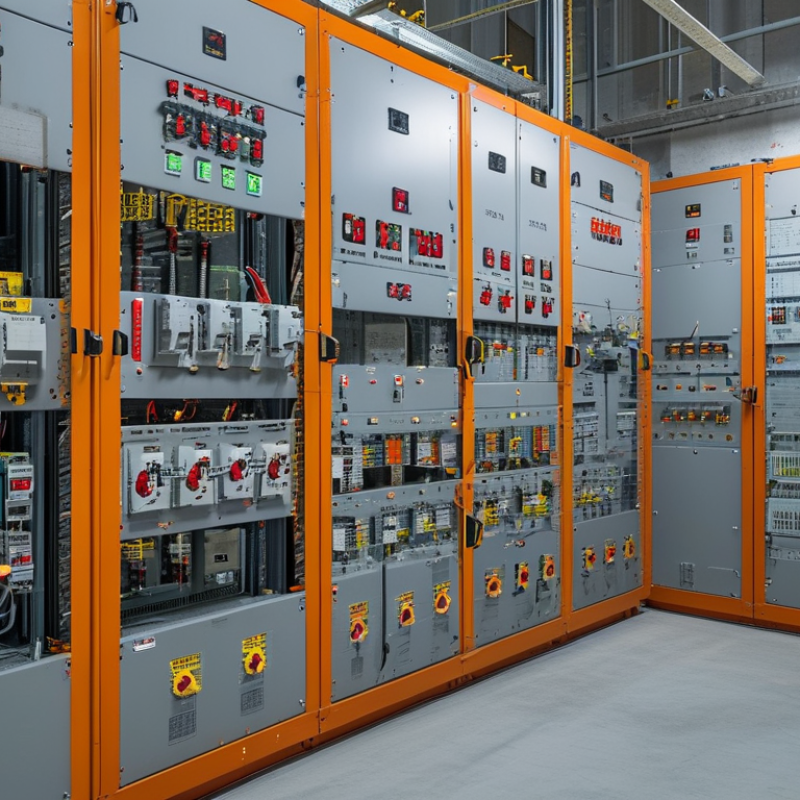
An electrical switchgear box is an enclosed assembly that controls, protects, and isolates electrical circuits. It may contain circuit breakers, disconnectors, fuses, busbars, meters, and protection relays. Together, these parts manage power safely from an incoming supply to several outgoing circuits. When a fault occurs, the protective device interrupts current before damaged cables or equipment create greater danger.
In practical installations, the box is more than a metal enclosure. Its internal layout affects heat removal, inspection time, and future repairs. I have seen crowded compartments turn a simple breaker replacement into a slow, risky task. Clear labeling matters. So does safe access. Choose an enclosure with suitable voltage, current, short-circuit, and ingress-protection ratings. Outdoor locations may need stronger sealing and corrosion resistance. Dusty workshops require different protection from clean indoor rooms.
Selection should also reflect the real load, not only today’s demand. Leave capacity for expansion, but avoid oversized equipment without technical justification. Check temperature rise, cable entry space, earthing arrangements, and maintenance clearance. Local electrical rules and qualified inspection remain essential. Digital monitoring can show load trends, yet sensors do not replace physical checks. That assumption is often wrong. A reliable switchgear box balances protection, accessibility, verified performance, and the conditions surrounding it.arsuaq
How to Choose an Electrical Switchgear Box in 2026?
Electrical switchgear boxes house switching, protection, control, and isolation equipment. The system voltage is a primary selection factor because the enclosure, insulation, clearances, and fault-withstand requirements must match the application.
The chart shows representative nominal voltage levels commonly used in electrical networks, including 0.4 kV low-voltage systems, 11–33 kV medium-voltage systems, and 132–400 kV high-voltage transmission systems. Actual switchgear selection should also verify rated current, short-circuit withstand, insulation level, environmental conditions, enclosure ingress protection, maintenance access, and applicable IEC or local standards.
Which Electrical Ratings and Protection Levels Should You Check?
How to Choose an Electrical Switchgear Box in 2026?
Which Electrical Ratings and Protection Levels Should You Check?
Choosing a switchgear box starts with its electrical ratings, not its appearance. Check the system voltage, continuous current, frequency, and number of poles. A box rated for 400 volts may not suit a higher-voltage installation. Confirm the short-circuit withstand rating with the available fault current at the site.
During commissioning work, I have seen correctly sized breakers installed inside poorly rated enclosures. That mistake can create heat, moisture, and service problems. Review the enclosure’s IP rating for dust and water resistance. For outdoor locations, an IP65 or higher level may be appropriate, but exposure conditions still matter. Salt air, direct sunlight, and heavy rain can reduce service life.
Mechanical protection also deserves attention. An IK rating indicates resistance to impact from tools or accidental strikes. Check the box material, door seal, hinges, cable glands, and internal clearance. Thermal performance is easy to overlook. Calculate heat from breakers, busbars, and control devices, especially in a sealed cabinet.
Do not rely on a single label.
Compare ratings with local electrical codes and the manufacturer’s test documentation. A qualified electrical professional should verify coordination between protective devices. I sometimes find that preliminary load estimates are too optimistic. Recheck motor starting currents, future circuits, and ambient temperature before ordering. Small omissions become expensive after installation.
How to Choose an Electrical Switchgear Box in 2026? - Which Electrical Ratings and Protection Levels Should You Check?
| Selection Dimension | What to Check | Typical Values or Classes | Why It Matters | Recommended Verification |
|---|---|---|---|---|
| Rated Voltage (Ue) | Confirm the system voltage, frequency, number of phases, and whether the enclosure is for low-voltage AC or DC distribution. | 230/400 V AC, 480 V AC, 690 V AC DC ratings must be specified separately. | The switchgear assembly, busbars, protective devices, clearances, and insulation system must be suitable for the actual operating voltage. | Match the equipment rating to the highest continuous system voltage and the applicable local electrical code. |
| Rated Current (In) | Determine the maximum continuous load current, diversity factor, future expansion, and conductor ampacity. | 63 A to 4,000 A+ Common panel ranges include 125 A, 250 A, 630 A, 1,600 A, and 2,500 A. | An undersized rating can cause overheating, nuisance trips, reduced service life, or insulation damage. | Check temperature-rise test data, busbar capacity, terminal ratings, and derating for ambient temperature and grouping. |
| Short-Circuit Withstand | Check prospective fault current at the installation point and the assembly’s short-time withstand current (Icw), peak withstand current (Ipk), or conditional short-circuit rating. | 10 kA to 100 kA Common values include 25 kA, 36 kA, 50 kA, and 65 kA for defined durations. | The enclosure and internal conductors must withstand thermal and electrodynamic forces until the protective device clears the fault. | Use the utility or engineering fault study. Verify coordination between upstream protection and the switchgear assembly. |
| Breaking Capacity | Verify the interrupting capacity of circuit breakers and fuses, including service short-circuit capacity where applicable. | Icu and Ics values in kA Ics is normally expressed as a percentage of Icu. | The protective device must safely interrupt the available fault current without catastrophic failure. | Ensure the device rating is not lower than the calculated prospective short-circuit current at its terminals. |
| Ingress Protection (IP) | Select protection against solid objects, dust, and water according to the installation environment. | IP31 Indoor, limited protection IP54 Dust-limited and splash-resistant IP65 Dust-tight and water-jet resistant IP66 Dust-tight and powerful water-jet resistant | A higher IP code can reduce contamination and moisture entry, but it may also restrict natural cooling. | Check the complete assembled enclosure, door seals, cable glands, ventilation openings, and drainage arrangements. |
| Mechanical Impact Protection (IK) | Assess the risk of accidental impact from tools, vehicles, handling equipment, or public access. | IK05 0.7 J IK08 5 J IK10 20 J | Impact resistance helps prevent deformation, loss of enclosure integrity, and accidental exposure of live parts. | Specify an IK rating for the complete enclosure and consider the door, viewing windows, locks, and mounting accessories. |
| Insulation Level | Check rated insulation voltage (Ui), rated impulse withstand voltage (Uimp), creepage distances, and clearances. | Ui: commonly 500–1,000 V Uimp: commonly 4–12 kV, depending on the system and equipment category. | These values address long-term insulation stress and short-duration overvoltage events such as lightning or switching surges. | Confirm values for the assembly, incoming devices, busbars, terminals, and any surge-protection equipment. |
| Overvoltage Category | Identify where the equipment is installed in relation to the electrical supply and transient overvoltage exposure. | Category II, III, or IV Distribution switchboards commonly involve Category III conditions. | The category influences required impulse withstand capability and insulation coordination. | Apply the category defined by the installation standard and the equipment’s point of connection. |
| Pollution Degree | Evaluate dust, humidity, condensation, chemicals, and conductive contamination at the installation location. | Degree 2: normally non-conductive pollution Degree 3: conductive pollution or dry non-conductive pollution that becomes conductive | Pollution affects creepage distance, insulation reliability, corrosion resistance, and enclosure sealing requirements. | Use the actual environment rather than selecting a rating only from the indoor or outdoor location. |
| Ambient Temperature | Check minimum and maximum air temperature, solar heating, enclosure heat dissipation, and altitude. | Typical design reference: −5 °C to +40 °C Special ratings may be required outside this range. | Temperature affects conductor ampacity, breaker trip characteristics, component life, and internal heat accumulation. | Review manufacturer derating data, ventilation, forced cooling, heaters, thermostats, and enclosure solar-load calculations. |
| Altitude | Determine the installation elevation above sea level. | Up to 2,000 m: commonly used reference condition Above 2,000 m: derating may apply | Lower air density reduces cooling performance and dielectric withstand, especially at higher elevations. | Obtain altitude correction factors for current, insulation, and short-circuit performance. |
| Internal Separation | Decide whether busbars, functional units, terminals, and cable compartments need physical segregation. | Forms 1, 2, 3, or 4 Higher forms provide greater separation between functional sections. | Separation can improve operational safety, fault containment, maintenance access, and continuity of service. | Specify the required form and verify that barriers, shrouds, partitions, and terminal compartments are included. |
| Arc-Fault Protection | Consider internal arc classification, pressure relief, arc-resistant construction, and the expected fault location. | Internal arc testing may specify accessibility types and test duration Not every low-voltage enclosure is arc-resistant. | Internal arcs can generate extreme heat, pressure, molten metal, and toxic gases within milliseconds. | For high-risk installations, request tested internal-arc performance and define front, lateral, and rear accessibility. |
| Earthing and Bonding | Check protective conductor arrangement, enclosure bonding, earth-fault path, and door bonding. | PE or PEN arrangements Protective bonding must be continuous and appropriately sized. | A low-impedance fault path enables protective devices to disconnect the supply quickly and reduces touch-voltage risk. | Verify earth continuity, bonding points, conductor sizing, fault-loop impedance, and local requirements. |
| Cable Entry and Termination | Confirm cable type, conductor size, bending radius, gland plate arrangement, entry direction, and sealing method. | Top, bottom, or side entry Cable glands and terminals must match conductor material and cross-section. | Poor termination can cause loose connections, hot spots, water ingress, mechanical stress, and loss of the declared IP rating. | Check terminal temperature ratings, tightening torque, segregation, strain relief, and spare capacity for future circuits. |
| Standards and Testing | Confirm the applicable assembly, enclosure, breaker, wiring, and installation standards for the project location. | IEC 61439 for low-voltage assemblies IEC 60529 for IP code IEC 62262 for IK code | Standards establish design verification, routine verification, performance ratings, and safety requirements. | Request design-verification evidence, routine-test records, type-test information where relevant, and installation documentation. |
Selection note: The values shown are general engineering reference ranges, not a substitute for a project-specific design. Final selection should be based on the calculated load current, prospective short-circuit current, environmental conditions, local regulations, coordination study, and the verified ratings of the complete switchgear assembly.
How to Match the Box Design to Its Installation Environment
Choosing a switchgear box in 2026 starts with the installation environment, not its appearance. Indoor rooms need protection from dust, condensation, accidental contact, and cable heat. Outdoor cabinets face rain, ultraviolet radiation, salt, insects, and rapid temperature changes. The International Energy Agency’s Electricity 2024 report expects global electricity demand to grow by 3.4% annually through 2026. More energized equipment may enter harsher, crowded spaces. A box that fits the drawing can still fail beside a boiler, rooftop, or coastal walkway.
Use IEC 60529 IP ratings as a starting point, then verify the actual exposure. IP54 may suit limited dust and splashing, while heavy dust or washdown requires stronger protection. IEC 61439 requires low-voltage assemblies to address temperature rise, short-circuit withstand, and mechanical performance. Keep clearance around ventilation openings. Never seal heat inside merely to improve ingress protection. That trade-off is often missed. Start with exposure.
Tips: Inspect the real mounting location before selecting dimensions. Check sunlight, drainage, cable entry direction, and service access. For coastal sites, consider corrosion-resistant hardware and sealed cable glands. For dusty workshops, avoid unnecessary door gaps and inspect filters regularly. Water finds gaps. Measure twice.
One practical lesson is that enclosure selection should include future changes. Spare cable space and heat capacity can prevent forced modifications later. I sometimes see engineers choose an oversized box, then ignore internal airflow. Bigger is not automatically safer. Review the layout with a qualified electrical professional, and record the reasoning behind the chosen IP rating and installation method.
What Materials, Safety Features, and Standards Matter Most?
How to Choose an Electrical Switchgear Box in 2026?
Material choice affects safety, service life, and maintenance. Powder-coated steel suits indoor rooms and controlled industrial areas. Stainless steel performs better near moisture, salt, and cleaning chemicals. Polycarbonate can resist corrosion and reduce weight, but its impact strength needs careful verification. Aluminum offers lighter construction, though its surface protection may require closer inspection.
Look beyond appearance. The enclosure should match the required IP rating under IEC 60529 or the applicable local standard. NEMA classifications may also apply in North America. Confirm short-circuit withstand ratings, temperature limits, cable-entry protection, and internal clearances. A secure door, reliable hinges, insulated barriers, and visible grounding points reduce avoidable risks. Arc-flash mitigation may require pressure relief, segregation, remote operation, or other engineering controls. Ask a qualified engineer to verify the complete assembly against IEC 61439 or the relevant regional standard.
Small details matter. Field inspections often find loose gland plates, blocked vents, or missing bonding straps. These are not dramatic defects. They can still create heat, moisture, or shock hazards. A higher IP rating is not automatically better if heat cannot escape. I would also question unclear certificates, copied test reports, and vague material descriptions. Requirements vary by location and installation type. Review the latest authority requirements, inspect the enclosure after delivery, and document every deviation before energizing the equipment.
How to Compare Suppliers, Installation Needs, and Long-Term Costs
How to Choose an Electrical Switchgear Box in 2026?
Compare suppliers beyond the quoted price. Request verified short-circuit ratings, enclosure protection, temperature-rise data, and test certificates. IEC 61439 requires design and routine verification for low-voltage assemblies. Ask for the exact verification record, not a polished brochure. The cheapest offer still tempts buyers. It may exclude cable glands, spare breakers, site testing, or commissioning support. Compare delivery history, engineering response time, warranty exclusions, and local technical coverage.
Installation conditions can change the purchase decision. Measure the wall space, cable-bending radius, lifting route, ambient temperature, and available fault current. A field engineer should confirm earthing, ventilation, access clearance, and coordination settings before production. The U.S. Department of Energy reports that motor systems consume about 68% of industrial electricity. Correct protection and efficient distribution therefore affect operating costs, not only safety. IEA’s Electricity 2024 report projects global electricity demand to grow by an average 3.4% annually through 2026. Future load capacity deserves attention.
Use a five-year ownership sheet. Include purchase price, freight, installation labor, testing, energy losses, inspections, spare parts, downtime exposure, and disposal. NFPA 70B supports documented electrical maintenance programs, which makes service access financially important. Uptime Institute’s 2024 survey continues to identify power problems among major data-center outage causes. Treat supplier claims carefully. I would also price one realistic failure scenario, although that estimate is imperfect. Review it with operations staff before selecting the enclosure.