Blog
How to Choose the Right Material Lift in 2026?
Choosing the right material lift in 2026 requires more than comparing prices and maximum capacities. The decision begins with the actual worksite. Measure the load, lifting height, travel distance, floor condition, doorway width, and available storage space. A compact lift may fit a narrow aisle, yet struggle with uneven floors or frequent outdoor use. That detail matters.
Dr. David Michaels, a recognized occupational-safety authority, has said, “Safety is not a priority; it is a value.” This principle applies directly to material lift selection. Look for stable platforms, reliable brakes, clear controls, guarding, emergency stops, and documented inspection procedures. Confirm the rated capacity with the manufacturer. Never treat a specification sheet as a complete safety assessment. The operator’s training and the lift’s maintenance history matter just as much.
Technology will influence purchasing decisions in 2026. Battery monitoring, diagnostics, ergonomic controls, and quieter electric systems may improve productivity. However, newer does not always mean better. A highly connected lift can still be unsuitable for a dusty warehouse or a poorly planned route. We should admit that selection guides often oversimplify real conditions. Even experienced teams can overlook turning clearance, charging access, or seasonal temperature changes. A practical evaluation should include a site trial, operator feedback, and independent review of manufacturer documentation. The right material lift is not simply the strongest model. It is the safest, most maintainable, and most suitable choice for the work.
What Is a Material Lift and How Does It Work?
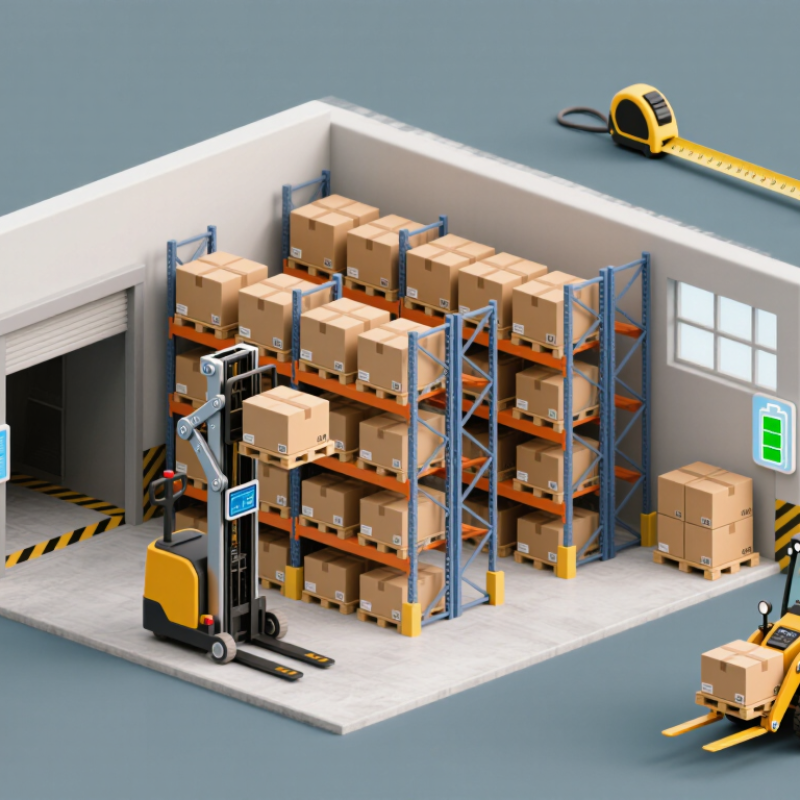
A material lift is a powered device that raises and lowers goods between floor levels. It commonly uses a platform, mast, winch, hydraulic cylinder, or enclosed carriage. Unlike a personnel lift, it is designed for materials, not passengers. OSHA’s 29 CFR 1910.68 addresses material-hoisting equipment and emphasizes guarding, controls, and safe operating conditions. That distinction matters. A lift carrying tile, ductwork, or boxed components must control both weight and movement. The operator loads the platform, secures the material, checks the rated capacity, and activates the lifting system. Brakes, limit switches, gates, and emergency controls help prevent uncontrolled travel.
Choosing correctly requires more than reading the maximum load. A practical site check should measure lifting height, doorway width, platform size, power supply, floor condition, and daily lifting frequency. A narrow warehouse may need a compact vertical lift, while construction work may require a rugged unit with adjustable access. The U.S. Bureau of Labor Statistics recorded 5,283 fatal work injuries in 2023, showing why equipment selection and operating discipline cannot be treated as paperwork. The uncomfortable truth is that a lift can meet its capacity rating and still be unsuitable. Overloading is obvious. Poor access is not. In real operations, awkward loading, unstable materials, or rushed positioning can create the greater risk. Plans also change. Recheck the lift when the site, load shape, or work sequence changes.
Which Load, Height, and Capacity Requirements Matter Most?
Choosing the right material lift in 2026 starts with the actual load, not the advertised maximum. Record the heaviest item, its dimensions, and how often it will be moved. A 450-kilogram machine part may require more capacity if it swings or shifts during travel. Keep a safety margin, but avoid buying an oversized lift that reduces maneuverability.
Height matters in two ways: required platform height and available storage clearance. Measure the lowest doorway, ceiling beam, and unloading point. A lift reaching 6 meters may still fail if its mast cannot pass through a 2.4-meter door. MHI’s 2024 Annual Industry Report found that 83% of respondents were increasing investment in supply-chain technology. That trend rewards equipment selected from measured workflow data, not guesswork. I have seen capacity assumptions fail when pallets were weighed without packaging.
Tips: Check the load center, lift cycle frequency, floor condition, and turning radius. Ask for rated capacity at the intended height. Never rely on the nominal maximum alone.
Capacity should match both weight and duty cycle. A 1,000-kilogram rating may be unsuitable for repeated near-limit lifts throughout a shift. Review the manufacturer’s load chart, inspection guidance, and applicable safety standard before approval. OSHA’s material-handling guidance emphasizes stable loads, clear travel paths, and trained operators. These details seem ordinary. They prevent expensive surprises.
How Do You Compare Lift Types for Different Worksites?
When comparing material lifts, match the lift type to the worksite, not just the load rating. A compact manual lift can serve indoor maintenance rooms and small warehouses. It works well when operators move loads occasionally over short distances. Electric lifts suit repetitive handling, taller elevations, and heavier materials. Power matters.
A narrow aisle may favor a compact mast lift, while a busy construction area may require a lift with larger wheels and stronger stability. Check doorway widths, floor conditions, ceiling height, and available power before choosing. Outdoor surfaces can be uneven, dusty, or wet. Not every lift performs reliably there. I have seen projects lose time because teams measured the platform height but ignored the building entrance.
Before selection, review rated capacity, load center, lifting speed, footprint, and emergency lowering features. A 500-kilogram rating does not mean every load is safe at every position. Long pipes and sheet materials can shift their center of gravity. Use the manufacturer’s operating instructions and trained personnel during evaluation. Small errors matter.
I also recommend observing the actual workflow for one busy shift. A lift that looks efficient during a demonstration may feel slow beside a production line. On one site, a lighter manual model seemed economical, but repeated lifting exhausted the crew. A powered option would have reduced strain, although its charging needs were underestimated. That detail still deserves more careful planning.
How to Choose the Right Material Lift in 2026? - How Do You Compare Lift Types for Different Worksites?
| Lift Type | Typical Rated Capacity | Typical Working Height | Power Source | Best-Suited Worksites | Mobility and Setup | Key Advantages | Main Limitations | Primary Selection Criteria |
|---|---|---|---|---|---|---|---|---|
| Manual Push-Around Material Lift | Approximately 150–1,000 lb (68–454 kg) |
Approximately 5–30 ft (1.5–9.1 m) |
Manual winch or battery-assisted lifting | Retail interiors, warehouses, offices, light construction, maintenance areas | Manually moved; compact footprint; usually quick to position | Low purchase and operating cost; easy indoor maneuverability; low noise | Limited capacity, speed, and suitability for uneven outdoor surfaces | Load weight, ceiling height, doorway width, floor condition, and frequency of use |
| Powered Walk-Behind Material Lift | Approximately 500–1,500 lb (227–680 kg) |
Approximately 8–30 ft (2.4–9.1 m) |
Rechargeable electric battery | Distribution centers, commercial buildings, equipment rooms, indoor construction | Powered travel or assisted positioning; requires charging access | Reduces manual effort; precise indoor positioning; quieter than combustion equipment | Battery charging time; limited outdoor capability; capacity varies significantly by model | Battery runtime, aisle width, floor loading, service access, and daily lifting cycles |
| Self-Propelled Electric Material Lift | Approximately 750–2,000 lb (340–907 kg) |
Approximately 15–40 ft (4.6–12.2 m) |
Rechargeable electric battery | Large indoor facilities, finished buildings, industrial maintenance, low-emission zones | Self-propelled; typically requires a trained operator and stable floor conditions | Higher productivity; good maneuverability; zero direct exhaust emissions indoors | Higher cost than manual units; not intended for rough terrain or steep slopes | Travel route, turning radius, battery capacity, platform or fork configuration, and operator training |
| Counterbalanced Forklift | Approximately 3,000–8,000 lb (1,361–3,629 kg) |
Approximately 10–25 ft (3.0–7.6 m), depending on mast configuration |
Electric battery, LPG, diesel, or other approved power systems | Warehouses, manufacturing plants, loading yards, construction material handling | Powered travel; needs adequate aisle clearance, load stability, and traffic controls | High capacity; effective for pallets; suitable for frequent horizontal and vertical movement | Larger turning radius; may create emissions or noise; requires qualified operators | Load center, mast height, aisle width, ground conditions, ventilation, and operating regulations |
| Rough-Terrain Forklift | Approximately 4,000–10,000 lb (1,814–4,536 kg) |
Approximately 15–30 ft (4.6–9.1 m) |
Diesel or other combustion power systems | Outdoor construction sites, lumber yards, infrastructure projects, uneven ground | Powered travel with large tires; requires firm, assessed ground and site controls | Strong outdoor mobility; handles rougher surfaces and heavier loads than indoor lifts | Higher fuel, noise, and maintenance requirements; unsuitable for many enclosed spaces | Terrain slope, ground bearing capacity, tire type, load center, weather, and overhead hazards |
| Telehandler | Approximately 5,000–12,000 lb (2,268–5,443 kg) |
Approximately 20–60 ft (6.1–18.3 m) |
Diesel engine with hydraulic boom system | Building sites, agricultural operations, infrastructure work, elevated outdoor placement | Self-propelled; telescopic reach; often requires substantial operating and setup space | Combines lifting, reaching, and placement over distance; versatile attachment options | Capacity decreases as reach increases; ground stability and load charts are critical | Required reach, load chart, outrigger use, ground conditions, attachment type, and overhead clearance |
| Hydraulic Scissor Lift for Materials | Approximately 500–2,000 lb (227–907 kg), depending on configuration |
Approximately 10–50 ft (3.0–15.2 m) |
Electric or hydraulic power system | Manufacturing, maintenance, installation, and areas requiring a stable vertical work platform | Usually self-propelled or towable; must be used on suitable, generally level surfaces | Provides a broad, stable platform for positioned materials and authorized work tasks | Limited horizontal reach; not a substitute for a forklift when transporting pallets over distance | Platform capacity, deck dimensions, surface level, guardrails, wind exposure, and intended load distribution |
Which Safety, Mobility, and Power Features Should You Check?
How to Choose the Right Material Lift in 2026?
When selecting a material lift, inspect safety features before comparing lifting height. Confirm the rated load matches your heaviest routine task, not an optimistic estimate. Check the emergency stop, platform guardrails, interlocks, and overload protection. A stable mast matters, especially when the lift works near shelving or uneven warehouse floors. Look for clear warning labels and accessible inspection points. These details can prevent small errors from becoming serious incidents.
Tips: Test the brakes, wheels, and controls before purchase. Ask for maintenance records, operator training guidance, and test certificates. Verify that the lift meets safety requirements in your region. Do not rely only on a product brochure.
Mobility affects daily productivity. Choose large, durable wheels for rough surfaces and locking casters for precise positioning. A compact turning radius helps in narrow aisles, although smaller frames may reduce platform space. Consider battery type, charging time, and expected shifts per day. A battery indicator is useful, but it should not replace a charging routine. Some modern lifts offer fault codes or diagnostic displays, which can simplify servicing. Still, electronic features can fail, so manual controls and mechanical safeguards remain important.
Power should feel steady, not excessive. Smooth acceleration protects loads and reduces operator fatigue. Compare lifting speed under a realistic load, rather than an empty platform. I would also leave some capacity unused; maximum ratings are not comfortable working targets. A hands-on trial may expose awkward controls or poor visibility that specifications miss.
How Can You Evaluate Costs, Maintenance, and Long-Term Value?
Choosing a material lift in 2026 should start with its working pattern, not its purchase price. Record load weights, lifting height, daily cycles, and floor conditions for a typical month. A lift moving 500 kilograms twice daily has different needs from one moving 250 kilograms every ten minutes. Ask for documented capacity ratings, service intervals, emergency controls, and operator guidance. These details show whether the machine fits real work or only a sales specification.
Compare total ownership costs over five to seven years. Include purchase, delivery, setup, electricity, inspections, replacement parts, and technician hours. Ask how quickly common wear items can be obtained. A low initial price may become costly after hydraulic leaks or long service delays. Downtime is expensive. Estimate lost labor using actual hourly production, not a hopeful guess. My first estimate is often too optimistic, especially when access is tight or relocation is frequent. Add contingency for weather, uneven surfaces, and seasonal workloads.
Request maintenance records for used equipment, or establish digital logging for new equipment. During a hands-on inspection, check welds, chains, brakes, platforms, controls, and battery condition. Schedule preventive service around operating cycles, not calendar dates alone. A reliable lift should remain stable, repairable, and productive after several years. Resale value matters, but uptime matters more. Review warranty exclusions carefully. Track it monthly. If repair frequency exceeds expectations, revise the ownership model before buying another unit.
How to Choose the Right Material Lift in 2026?
Compare upfront cost, five-year maintenance, and expected service life for common portable material-lift configurations in the 300–450 kg rated-load class.
Planning benchmarks in USD. Five-year maintenance assumes routine inspections, servicing, wear parts, and typical battery-related upkeep where applicable; freight, financing, operator labor, and tax are excluded. Confirm local quotations and warranty terms before purchasing.
Related Posts
-
China Best Material Lift Supplier How to Choose?
-
10 Essential Material Handling Tips for Increased Warehouse Efficiency
-
How to Choose the Best Lifting Equipment for Your Needs?
-
Top Material Handling Products to Boost Efficiency in 2025
-
Top Lifting Gear Trends for 2025 You Need to Know About Now
-
What is Industrial Lifting Equipment and How to Choose It?