Blog
How to Choose Manual Lifting Equipment for Global Buyers?
Choosing manual lifting equipment for global buyers is not merely a price comparison. It is a risk decision.
The World Health Organization estimates that 1.71 billion people live with musculoskeletal conditions worldwide. Manual handling remains a practical concern in warehouses, workshops, ports, and construction sites. The International Labour Organization also stresses that safe work depends on suitable equipment, training, and workplace design. These findings make capacity, control, and operator posture essential buying criteria.
A hand pallet truck may look simple. Yet wheel diameter, turning radius, handle height, and floor condition can change its performance. A chain block may offer impressive rated capacity. However, poor anchoring or unclear inspection records can make that capacity irrelevant. Global buyers should verify working load limits, test certificates, spare-parts access, language-specific manuals, and after-sales support. Standards matter, but local operating habits matter too.
Ergonomics specialist Dr. David Rempel expresses the central principle clearly: “Fit the job to the worker, not the worker to the job.” That idea should guide every manual lifting equipment decision. Select equipment around the real load, travel distance, lifting frequency, and user strength. Do not rely on catalog photographs.
A neat checklist can still fail.
Even experienced buyers sometimes overlook humidity, uneven floors, package dimensions, or seasonal workload changes. That is where practical site observation becomes valuable. This guide compares equipment types, technical specifications, supplier credibility, certification evidence, and total ownership costs. It also questions assumptions that appear reasonable but may create hidden safety or maintenance problems across international operations.
Define the Load, Lift Height, and Frequency Requirements
Define the load before comparing manual lifting equipment. Record gross weight, dimensions, center of gravity, lifting points, and surface condition. A 500-kilogram steel crate behaves differently from a compact machine with an uneven center. Include packaging, accessories, and possible impact forces. Field experience shows that buyers often measure the product, but forget the pallet. That mistake can change the equipment rating.
Lift height needs equal attention. Measure the lowest pickup point, required final height, and available overhead clearance. Also record aisle width and operator reach. A short lift may still demand excessive bending or twisting.
The UK Health and Safety Executive reported 543,000 workers with work-related musculoskeletal disorders in 2023/24, causing 7.8 million lost working days.
Its data supports treating posture as a specification, not an afterthought. ISO 11228-1 also encourages assessment of lifting frequency, load position, and working conditions.
Frequency determines durability and human effort. State cycles per hour, operating hours per shift, and seasonal peaks. Occasional warehouse use may suit different equipment than repeated production lifting. Ask whether one operator performs every cycle. Add a realistic reserve for friction, floor defects, and uneven loading.
Not every calculation is perfect. Recheck it during a trial lift. Record the result, then compare capacity, lift range, controls, maintenance access, and local conformity requirements. The cheapest option can become expensive when fatigue, downtime, or poor access appears later.
Compare Manual Lifting Equipment Types and Operating Methods
How to Choose Manual Lifting Equipment for Global Buyers?
When global buyers compare manual lifting equipment, the operating method matters as much as rated capacity. A hand chain hoist lifts vertically through repeated chain pulls. It suits workshops, warehouses, and installation points with overhead support. A lever hoist uses a short lever stroke and works well for pulling, positioning, or lifting in restricted spaces. Manual winches provide controlled horizontal movement when a secure anchor is available. These tools are not interchangeable. I have seen buyers select by price alone, then struggle with awkward access.
Check the working load limit, lift height, anchor strength, and clearance before comparing prices. The operator should stand outside the suspended-load path and keep a steady rhythm. Chain hoists need aligned lifting; side loading can damage components. Lever hoists require full handle movement, not rushed half-strokes. Winches need even cable or rope winding on the drum.
Small details matter. Before each use, inspect hooks, latches, chains, cables, brakes, and labels for distortion, corrosion, or unusual wear. Follow manufacturer instructions and applicable local safety rules, because requirements differ between countries.
For frequent vertical lifting, a chain hoist is usually easier to control. For short pulls or precise tensioning, a lever hoist may be more practical. A winch can cover distance, but its anchor and line angle demand extra attention. Capacity is not the whole decision. Temperature, dust, moisture, operator strength, and service access also affect reliability. I would document the choice, even for a small lift. That habit feels excessive until site conditions change.
Check Capacity, Safety Features, and Workplace Compatibility
Manual lifting equipment should be selected from real loads, not attractive catalogue figures. Record the load’s weight, shape, lifting points, and movement frequency. Use the working load limit, not the breaking strength. A 500-kilogram load may need more capacity when it swings, rolls, or starts unevenly. Leave a sensible margin. Do not guess it.
Safety features matter during ordinary work. Look for reliable brakes, guarded moving parts, controlled lowering, and clearly marked capacity plates. Hooks should have secure latches, while chains, ropes, and wheels need easy inspection access. Ask for test records, maintenance guidance, and instructions in a language workers understand. Train operators with the actual equipment. A short demonstration is useful. It is not enough.
Workplace compatibility can decide whether good equipment performs badly. Measure doorways, aisle widths, floor strength, ceiling clearance, and storage space before ordering. A trolley that fits the warehouse may fail on a sloped loading area. Check temperature, dust, moisture, and available power, if the device needs it. Manual tools still require human effort. Consider handle height, grip comfort, pulling distance, and repetitive movements. I have seen teams overlook these details, then avoid using the equipment correctly. That is a purchasing failure, not simply an operator failure. Recheck measurements with the people who will use the equipment; office assumptions are often wrong.
How to Choose Manual Lifting Equipment for Global Buyers? - Check Capacity, Safety Features, and Workplace Compatibility
| Equipment Type | Typical Rated Capacity | Typical Lifting or Handling Range | Main Safety Features | Workplace Compatibility | Best Application | Important Buyer Checks |
|---|---|---|---|---|---|---|
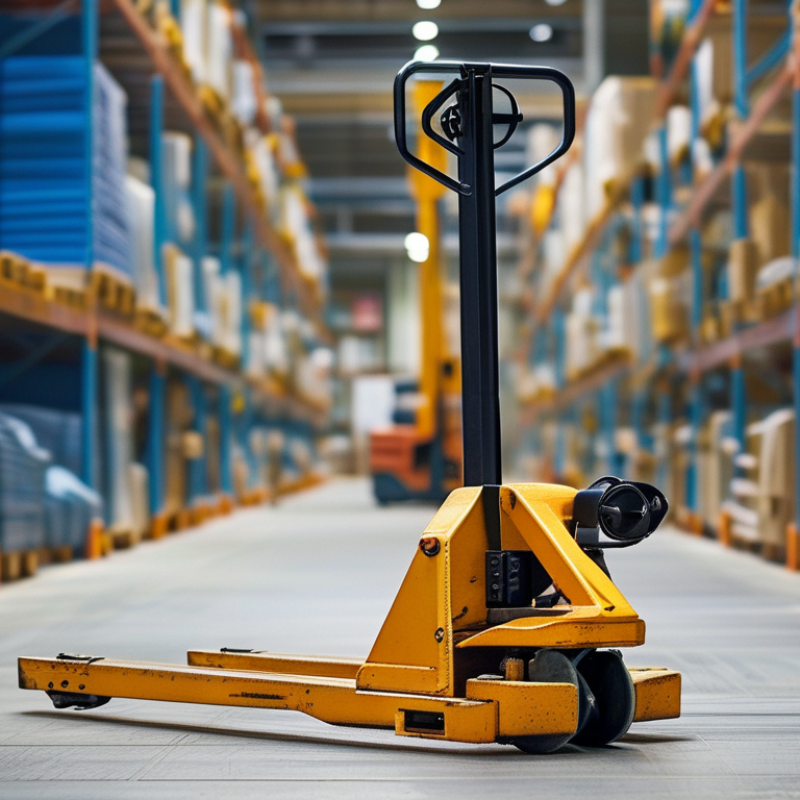
| Manual Pallet Truck | 2,000–3,000 kg | Fork lift height commonly 75–200 mm; fork lengths commonly 800–2,500 mm | Lowering-speed control, parking brake on selected models, rounded fork tips, overload protection on selected hydraulic systems | Smooth, level floors; palletized loads; adequate aisle width and turning space | Moving pallets over short distances in warehouses, loading areas, and production zones | Confirm pallet entry dimensions, steering angle, wheel material, ramp suitability, and floor condition |
| Manual Hydraulic Stacker | 500–1,500 kg | Lift heights commonly 1,000–3,000 mm | Load backrest, parking brake, safety lowering valve, protective guards, and mechanical holding system | Indoor use on firm, level floors; requires sufficient overhead clearance and stable travel paths | Raising pallets for low- and medium-level storage without powered equipment | Check mast height, lowered height, load-center rating, turning radius, and floor load capacity |
| Manual Chain Hoist | 500–20,000 kg; some heavy-duty models are rated higher | Standard lift commonly 3–6 m; longer chains may be available | Automatic mechanical load brake, Grade 80 or equivalent load chain, forged hooks with safety latches, overload protection on selected models | Suitable only where a verified overhead beam, trolley, or lifting point has adequate capacity | Vertical lifting and positioning of machinery, dies, structural parts, and maintenance loads | Verify support-structure capacity, headroom, lift height, chain grade, hook condition, and inspection requirements |
| Manual Lever Hoist | 250–9,000 kg | Standard lift commonly 1.5–3 m; compact body for restricted headroom | Automatic brake, free-chain mechanism, safety-latch hooks, enclosed gearing, and overload protection on selected models | Useful in confined areas and for horizontal pulling when the anchorage is properly rated | Rigging, alignment, tensioning, maintenance work, and short-distance pulling or lifting | Check pull force, anchorage angle, minimum headroom, chain length, and whether side loading is prohibited |
| Manual Winch | 300–1,800 kg line pull, depending on configuration | Cable or strap lengths commonly 5–15 m | Self-locking or ratchet mechanism, guarded drum, hook latch, and rated anchorage point | Suitable for horizontal pulling or controlled movement; not automatically suitable for overhead lifting | Vehicle recovery, equipment positioning, trailer loading, and tensioning tasks | Distinguish line pull from suspended-load capacity; inspect cable or strap, anchorage, drum winding, and operating angle |
| Manual Scissor Lift Table | 150–1,000 kg | Lift range commonly 90–1,000 mm; platform sizes often 700–1,200 mm long | Mechanical safety lock, overload valve, toe guards, anti-slip platform, and swivel casters with brakes on selected models | Indoor workstations and level floors; platform must remain within its rated center-of-gravity limits | Ergonomic positioning, order picking, assembly, and transferring loads between working heights | Check platform dimensions, lowered height, wheel configuration, operator clearance, and pinch-point protection |
| Drum Lifter or Drum Handler | 200–400 kg per drum, depending on drum size | Lift heights commonly 1,000–1,500 mm; designed for standard steel or plastic drums | Positive drum clamp, retaining mechanism, controlled lowering, wheel brakes, and load backrest on selected designs | Suitable for compatible drum diameters on level, stable floors; chemical environments may require corrosion-resistant materials | Moving, lifting, tilting, or dispensing from drums in warehouses and processing areas | Confirm drum diameter, rim profile, filled weight, clamp engagement, surface compatibility, and spill-control requirements |
Evaluate Materials, Maintenance Needs, and Total Ownership Costs
How to Choose Manual Lifting Equipment for Global Buyers?
Material selection affects safety, service life, and ownership cost. Powder-coated steel suits heavy warehouse use, while stainless steel performs better in humid or corrosive areas. Aluminum reduces carrying weight, but may need stronger reinforcement under repeated loads. Check the rated capacity, weld quality, wheel design, and handle comfort. A cheaper frame can become expensive after early deformation.
Maintenance deserves a realistic inspection plan. Review lubrication points, replacement-part availability, corrosion protection, and brake adjustment requirements. The U.S. Department of Energy reports that preventive maintenance can reduce costs by 12–18% compared with reactive maintenance. Its guidance also links predictive maintenance with additional savings of 8–12% over preventive programs. These figures are not guarantees. Local labor rates and spare-part delays can change the result.
Calculate total ownership cost across the expected service period. Include purchase price, freight, training, inspections, repairs, downtime, and disposal. The International Labour Organization reported nearly three million work-related deaths annually in 2023, reinforcing the importance of controlled handling practices. Equipment alone cannot remove every lifting risk. Operator technique still matters. I would also test one unit in the real work area before a large order. Catalog specifications rarely reveal awkward turning space, wet floors, or uncomfortable grips. That small trial may expose a weakness early, although it adds time and administrative effort.
How to Choose Manual Lifting Equipment for Global Buyers?
Five-Year Total Ownership Cost by Equipment Type
This planning benchmark compares estimated five-year ownership costs in USD, including purchase price, scheduled maintenance, periodic inspections, and replacement parts. The figures are suitable for early-stage procurement comparisons and exclude freight, taxes, operator wages, and unplanned downtime.
Buyers should prioritize corrosion-resistant steel for demanding environments, verify load-bearing components and safety factors, and compare maintenance access and spare-part availability before selecting equipment. A lower purchase price may result in higher ownership costs when inspection and replacement requirements are greater.
Select Reliable Suppliers and Verify Global Compliance Standards
Choosing manual lifting equipment for global use requires more than comparing prices and rated capacities. Start by defining the load, lifting height, operating frequency, workspace, and expected temperature. A chain block for a clean workshop may fail early in a dusty outdoor yard. Ask suppliers for load-test records, material specifications, inspection instructions, and product traceability. Ask for evidence. Not promises.
A reliable supplier should explain which standards apply to the destination market and equipment type. Relevant references may include EN 13157, ASME B30 series, ISO 12100, or local certification requirements. These standards are not interchangeable. Request current declarations of conformity, test reports, risk assessments, and quality-system certificates. Check whether an independent laboratory issued the reports. Confirm that the documents match the exact model, capacity, and production version.
Supplier verification should include a factory audit, sample inspection, and a review of corrective-action records. Examine hook latches, brake performance, chain markings, weld quality, and warning labels. Make sure manuals use clear language for operators and inspectors. A certificate can look impressive yet cover another product. This happens. Online checks also have limits, especially when translated documents hide small differences. Record every question, response, and unresolved issue before purchase. A low-cost supplier may become expensive after missing parts, unclear maintenance, or failed arrival inspections. Test a sample under controlled conditions before approving larger shipments.
Related Posts
-
How to Choose the Right Lifting Gear for Your Needs?
-
Top 10 Bulk Material Handling Equipment You Need to Know?
-

Top 10 Material Handling Carts in China for Efficient Logistics Solutions?
-
10 Best Drum Tippers for Effortless Material Handling at Your Site?
-
What is Drum Handling and How to Safely Manage Drums in Your Workplace
-
Top Types of Material Handling Lifts You Should Know?