Blog
10 Best Quick Connect Fittings for Global Buyers?
Global buyers need more than a fitting that clicks into place. They need dependable sealing, suitable materials, clear pressure ratings, and reliable supply. A mismatch can mean leaks, downtime, or a fitting that will not mate with existing equipment. Small parts. Big consequences.
This guide compares 10 Quick Connect Fitting options for buyers assessing industrial, pneumatic, and fluid-transfer applications. It highlights connection styles, body materials, operating conditions, compatibility checks, and supplier support. As a practical editorial principle—not a quotation from a named, independently verified expert—“A quick connection is only dependable when the fitting, hose, and working conditions are matched.” Verify specifications against manufacturer documentation before ordering; product names alone are not enough.
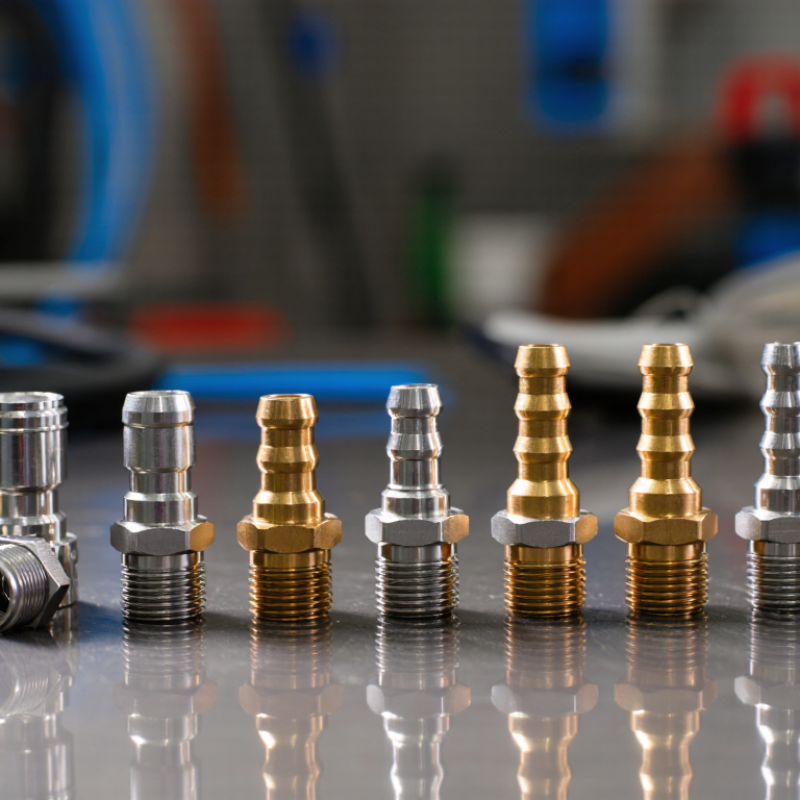
Global sourcing adds another layer. A fitting photographed beside a clean workbench may face vibration, temperature swings, frequent connection cycles, or rough handling in real service. Buyers should check dimensional standards, seal compatibility, replacement availability, and sample-testing options. Some supplier claims may sound reassuring but remain difficult to compare. That deserves a second look. Use the recommendations as a shortlist, then confirm each choice with the application’s actual requirements and qualified technical support.
What Are Quick Connect Fittings and How Do They Work?
Quick connect fittings join fluid or air lines without threading every connection. A plug enters a socket and locks behind internal balls, claws, or a sleeve. An O-ring then seals the passage around the plug. Pressing the release sleeve opens the locking mechanism. The line can be disconnected quickly, often without tools.
Some couplings stop flow automatically when separated. Others leave the circuit open, so pressure must be released first. That difference matters. A fitting may appear locked while the seal is damaged or partly inserted. Check the click, pull gently, and inspect for leakage. Never connect parts only because their outside diameter looks similar.
Global buyers should match the fitting to pressure, temperature, fluid type, and hose material. Stainless steel suits corrosive environments, while engineered polymers can reduce weight and cost. Seal materials also change performance in oil, water, compressed air, or cleaning chemicals. Thread standards and tube dimensions must match the installation region. An adapter may solve a mismatch, but it can add another leak point. In workshop testing, technicians should cycle the connection repeatedly, then check pressure loss after vibration and temperature changes. Small mistakes happen. Clear markings and written inspection records make them easier to find.
Key Types of Quick Connect Fittings for Different Applications
Quick connect fittings support faster installation, maintenance, and equipment changes across many industries. Their design should match pressure, temperature, fluid type, and connection frequency. Plug-and-socket couplings suit compressed air tools and workshop lines. Push-to-connect fittings work well with small pneumatic tubes and clean instrument systems. Threaded quick connectors provide strong connections for hydraulic equipment, but they require careful tightening.
Flat-face couplings help reduce fluid loss during hydraulic maintenance. Dry-break couplings limit spills when operators disconnect process lines. Cam-and-groove couplings handle larger hoses used for water, fuel, or general fluid transfer. Food and beverage systems often need smooth, cleanable surfaces and suitable sealing materials. Materials also matter. Stainless steel resists corrosion, while engineered polymers can reduce weight. An experienced buyer should check working pressure, temperature range, seal compatibility, and applicable regional standards. One overlooked detail can create leakage or poor performance. Not every popular fitting suits every application.
Tips: Confirm the tube or hose size before ordering. Check whether the fitting uses metric or imperial dimensions. Match seals with the actual media, not just the equipment name. Test connections under controlled pressure before full operation. Keep spare seals available, because small seals often cause unexpected downtime. Ask suppliers for technical drawings and traceable test information. Rechecking specifications feels slow, but it is usually cheaper than replacing incompatible fittings.
10 Best Quick Connect Fittings for Global Buyers
Global buyers need quick connect fittings that match pressure, temperature, media, and thread standards. The best ten options usually include pneumatic, hydraulic, water, fuel, and stainless-steel designs.
Material selection matters. Brass suits many general applications, while stainless steel handles corrosion better. Plastic fittings reduce weight but may weaken under heat or repeated movement.
A practical review should check working pressure, flow rate, seal material, and connection size.
ISO 4414 emphasizes safe pneumatic system design, including hose security and pressure control. The U.S. Department of Energy reports that compressed-air leaks can waste 20–30% of compressor output. A poor fitting can become an expensive, invisible leak.
Test every connection after installation. Small details matter.
Global compatibility also deserves attention.
NPT, BSP, and metric threads are not automatically interchangeable. Confirm the standard before ordering. Customs documents, batch traceability, and material certificates improve purchasing reliability.
In my experience, buyers often focus on unit price first. That can be a mistake.
A cheaper fitting may require adapters, create pressure loss, or fail during frequent coupling.
MarketsandMarkets identifies automation, maintenance efficiency, and modular equipment as important drivers in fluid-connectivity demand. Still, report categories differ, so buyers should compare specifications rather than trust rankings alone.
There is no universal best fitting. The right choice depends on the system, environment, and maintenance routine.
How to Compare Materials, Sizes, Standards, and Performance
10 Best Quick Connect Fittings for Global Buyers?
Choosing quick connect fittings is not only a price decision. Material, size, standards, and operating conditions must match the application. Stainless steel suits corrosive fluids and outdoor equipment, while brass works well in many general pneumatic and hydraulic systems. Engineering polymers can reduce weight, but heat and chemical exposure may limit their service life.
Check the actual tube outside diameter, not only the nominal size. A 10 mm tube does not equal a 3/8-inch tube. Thread standards also create problems. NPT, BSP, and metric threads may look similar, yet they seal differently. Confirm pressure, temperature, flow rate, and media compatibility from technical documents. Pay close attention to seal materials. A seal that performs well with air may swell in oil or cleaning fluid.
Performance data should include leak testing, connection cycles, burst pressure, and flow loss. Ask for material certificates, dimensional drawings, and batch traceability. These details support reliable purchasing across borders. In field inspections, I have seen fittings pass a pressure test but fail after repeated connection. That weakness is easy to miss. A perfect catalog table is not enough. Consider vibration, dust, installation space, and operator handling. When standards conflict, request written clarification before approval. Small uncertainty can become a costly replacement.
10 Best Quick Connect Fittings for Global Buyers? - How to Compare Materials, Sizes, Standards, and Performance
| No. | Fitting Type | Typical Material | Common Sizes | Connection / Interchange Standard | Typical Working Pressure | Typical Temperature Range | Seal Options | Best-Suited Applications |
|---|---|---|---|---|---|---|---|---|
| 1 | ISO 16028 Flat-Face Hydraulic Coupling Low-spill design | Carbon steel with zinc or trivalent-chromium plating; stainless steel options | DN 6–25 1/4–1 in | ISO 16028; commonly selected for interchangeable flat-face hydraulic systems | Up to approximately 250–350 bar | Approximately −25°C to +100°C | Nitrile (NBR), fluorocarbon (FKM), polyurethane backup rings | Mobile hydraulics, construction equipment, agricultural machinery, and applications where fluid loss and contamination must be minimized |
| 2 | ISO 7241 Series A Hydraulic Coupling General-purpose hydraulic | Plated carbon steel; stainless steel and brass variants | DN 6–50 1/4–2 in | ISO 7241-A | Approximately 250–350 bar, size and design dependent | Approximately −25°C to +100°C | NBR, FKM, EPDM, and other elastomers according to fluid compatibility | Industrial hydraulic circuits, lifting equipment, fluid transfer lines, and general-purpose machinery |
| 3 | ISO 7241 Series B Hydraulic Coupling Widely used industrial profile | Plated carbon steel, stainless steel, or brass | DN 6–50 1/4–2 in | ISO 7241-B | Approximately 175–250 bar, size and manufacturer dependent | Approximately −20°C to +100°C | NBR, FKM, and EPDM options | Industrial machinery, hydraulic tools, process equipment, and moderate-pressure fluid lines |
| 4 | ISO 14541 Screw-to-Connect Hydraulic Coupling High-pressure connection | Hardened carbon steel; stainless steel versions for corrosive environments | DN 6–25 1/4–1 in | ISO 14541; threaded connection must be fully tightened before pressurization | Approximately 350–700 bar, depending on size and construction | Approximately −25°C to +100°C | NBR, FKM, and polyurethane sealing elements | High-pressure hydraulic tools, test equipment, jacking systems, and circuits exposed to vibration |
| 5 | ISO 5675 Agricultural Hydraulic Coupling Tractor and implement service | Zinc-plated carbon steel; stainless steel options | DN 6–25 1/4–1 in | ISO 5675; commonly used on agricultural tractors and implements | Approximately 210–250 bar | Approximately −25°C to +100°C | NBR as standard; FKM for higher temperature or chemical resistance | Tractors, loaders, harvesters, agricultural attachments, and hydraulic implements |
| 6 | ISO 6150 B Pneumatic Coupling Industrial air service | Nickel-plated brass, steel, or engineering polymer | Nominal bore 5–13 mm Common port sizes: 1/4–1/2 in | ISO 6150-B profile; verify plug and socket interchangeability | Typically up to 10–15 bar | Approximately −20°C to +80°C | NBR, EPDM, or FKM depending on air quality and temperature | Factory automation, compressed-air tools, pneumatic control lines, and maintenance systems |
| 7 | ISO 6150 C Pneumatic Coupling European-style air systems | Nickel-plated brass, steel, stainless steel, or polymer | Nominal bore 5–13 mm Common port sizes: 1/4–1/2 in | ISO 6150-C profile | Typically up to 10–15 bar | Approximately −20°C to +80°C | NBR, EPDM, or FKM | Pneumatic tools, assembly lines, air distribution panels, and general compressed-air service |
| 8 | Cam-and-Groove Coupling Fast, tool-free connection | Polypropylene, aluminum, brass, stainless steel, or ductile iron | DN 15–150 1/2–6 in | EN 14420-7; legacy dimensions may be referenced as MIL-C-27487 | Typically 6–16 bar, depending on material, size, and media | Approximately −20°C to +100°C; polymer limits may be lower | NBR, EPDM, FKM, PTFE, or food-grade elastomers | Water, chemicals, fuel transfer, irrigation, dewatering, tank loading, and low-to-medium-pressure hoses |
| 9 | Dry-Break Quick Coupling Minimal leakage and air inclusion | Stainless steel, aluminum, brass, or engineered thermoplastic | DN 6–50 1/4–2 in | Supplier-specific profile; dimensional interchange must be confirmed before purchase | Typically 10–350 bar, depending on design and size | Approximately −20°C to +150°C, seal dependent | FKM, EPDM, NBR, PTFE, or specialty chemical-resistant seals | Fuel, chemicals, coatings, laboratory equipment, battery cooling, and sensitive fluid-transfer systems |
| 10 | Stainless-Steel Instrumentation Quick Coupling Corrosion-resistant service | 316 or 316L stainless steel; optional protective surface treatments | Tube sizes 6–12 mm 1/4–1/2 in ports | Tube-end and threaded configurations; verify thread standard such as ISO 7-1, ISO 228-1, or NPT | Approximately 100–350 bar, connection and bore dependent | Approximately −40°C to +150°C, seal dependent | FKM, EPDM, NBR, PTFE, or metal-seated designs | Instrumentation panels, sampling lines, gas systems, test benches, chemical processing, and marine environments |
Buyer’s note: Pressure and temperature figures are representative ranges for commonly available designs, not universal ratings. Before ordering, confirm the exact coupling profile, nominal bore, port thread, working pressure, burst pressure, fluid compatibility, seal material, test standard, and required approvals for the target market.
What Global Buyers Should Check Before Placing an Order
10 Best Quick Connect Fittings for Global Buyers?
Before placing an order, confirm the fitting’s working conditions. Check the fluid, operating pressure, temperature range, and connection size. A fitting rated for air may fail with oil, water, or aggressive chemicals. Material compatibility matters. Stainless steel, brass, and engineered polymers behave differently in humid or corrosive environments. Fit matters. Measure twice.
Thread standards can create expensive mistakes. Confirm whether the port uses metric, BSP, NPT, or another specification. Ask for clear dimensional drawings, not only product photos. Verify seal materials, flow direction, locking design, and release force. A test sample can reveal leakage, poor alignment, or difficult operation before bulk production. Small details matter.
Reliable suppliers should provide pressure data, inspection records, material information, and traceability documents. Check whether every carton has the correct part number and quantity. Packaging also deserves attention; loose fittings can arrive scratched or contaminated after a long shipment. Discuss tolerances, replacement procedures, lead times, and export documentation in writing. I have seen buyers approve a low quote, then discover that adapters were excluded. That mistake is easy to repeat. A written specification reduces assumptions, though it may not prevent every problem. Ask how the supplier controls batch consistency and handles nonconforming parts. When possible, compare the sample with the approved drawing before releasing payment.
10 Best Quick Connect Fitting Types for Global Buyers
Buyer-screening score based on connection reliability, application range, serviceability, and international specification clarity.
The scores are an editorial screening benchmark rather than standardized performance ratings. Before placing an order, confirm nominal size, connection standard, working pressure, temperature range, fluid or gas compatibility, sealing material, flow requirements, interchangeability, corrosion resistance, and required certifications.

